


Community radio stations for Bharat Electronics Limited (BEL)
Community radio studios had to reach a broadcast noise floor on sites with no acoustic control anywhere around them.
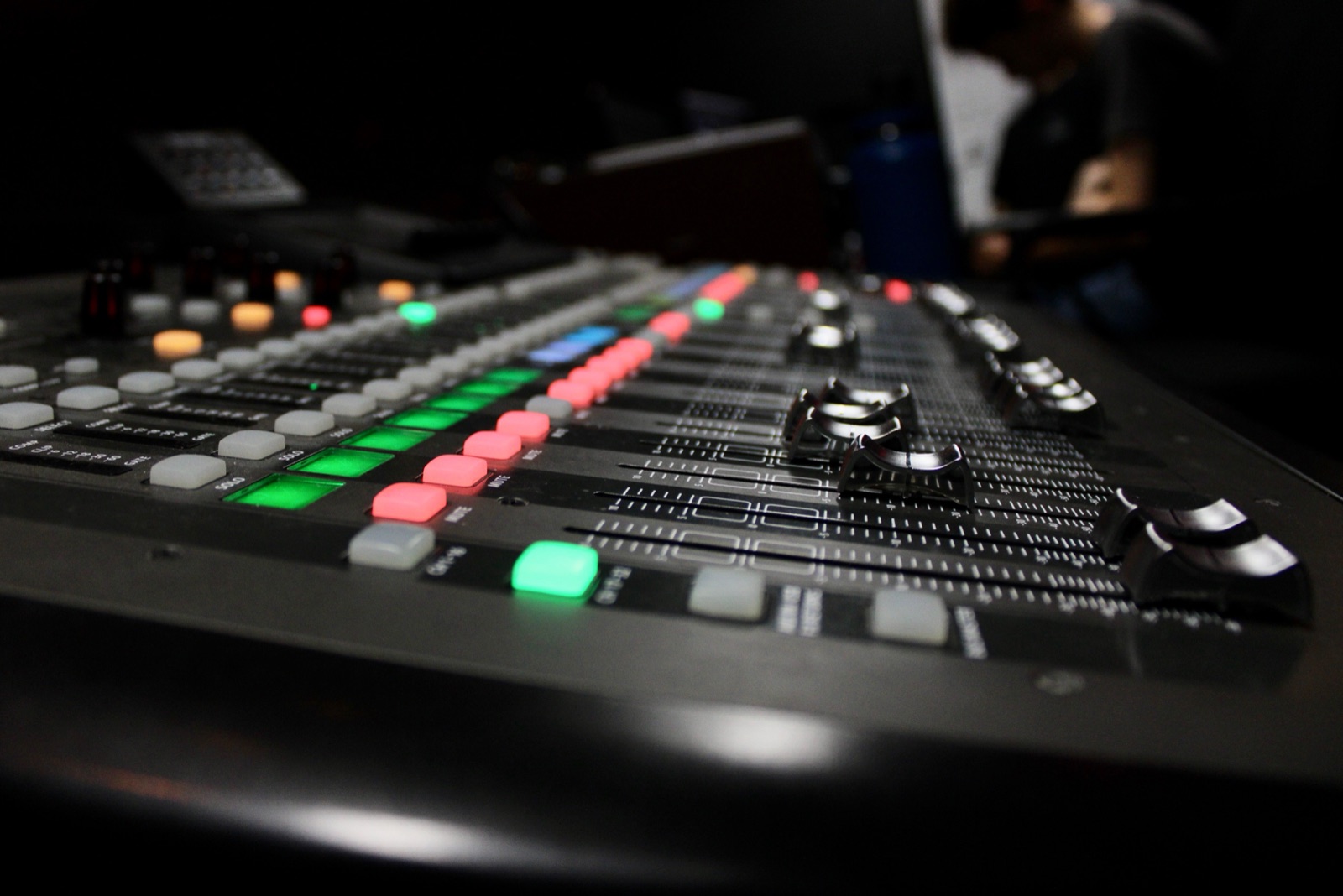
Working with Mr Manoj Jain of Bharat Electronics Limited (BEL), AV Acoustics has designed and delivered acoustic treatment across multiple Community Radio Station (CRS) installations, operated in the field by semi-governmental bodies and non-governmental organisations.
Why broadcast is different
Broadcast acoustics for community radio demands a materially different design philosophy from commercial or residential work. The studios must achieve extremely low ambient noise floors — typically NC-15 to NC-20 — so that unamplified voice recording and live broadcast do not carry the room's own self-noise into the signal chain. A microphone close to a speaker is unforgiving: whatever the room contributes is recorded along with the voice, and cannot be taken out afterwards.
At the same time the studios need robust airborne and structure-borne isolation from their surroundings, and in field-deployed CRS installations those surroundings are frequently semi-industrial, mixed-use or otherwise acoustically uncontrolled. The design cannot assume a quiet site, because there usually is not one.
What we built
- Floating-floor and decoupled wall assemblies, on discontinuous-construction principles akin to professional broadcast-standard studio design.
- Carefully specified door and window seal systems, to eliminate airborne leakage paths — the single most common point of acoustic failure in retrofitted broadcast environments.
- Reverberation time in each control and recording space tuned to sub-0.4-second targets, appropriate for close-microphone voice capture.
The reverberation figure is a target, not an instruction to absorb everything. Each room uses a calibrated blend of absorptive and diffusive treatment to avoid the 'dead room' artefact that degrades natural vocal timbre — a voice studio can be too dry as easily as too live, and a presenter who cannot hear the room will not sound comfortable in it. The same balance governs any recording room we build.
The result
A repeatable, standards-compliant studio design delivered across multiple CRS sites nationally, on whatever site each station was given.
The value in this body of work is its replicability. Public-interest media infrastructure operates at scale and on modest budgets, so the design logic has to travel: the same construction sequence, the same seal details and the same reverberation targets, adjusted for each site's structure and for whatever noise happens to sit outside it. That is a different kind of achievement from a single well-tuned room, and it is what broadcast work across diverse Indian field conditions actually requires.
Tell us the room
Send dimensions and intended use. You get back an indicative acoustic treatment, a systems outline and a budget range.